


STEADY RHYTHM
Learn life inquiry through your own life.

Steady Rhythm is a body of work around life inquiry — a practice of examining what is happening more precisely before deciding what, if anything, needs to change.
We already have the capacity to ntice, question, interpret and reconsider our experiences. Yet the rhythms and conditions of everyday life can influence how readily we exercise these abilities.
Steady Rhythm helps us recognise, practise and strengthen them, so we can participate in life more deliberately.
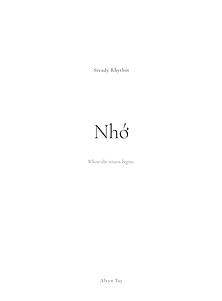
Nhớ
Movement I of the Steady Rhythm Prelude
Where the return begins.
Nhớ begins with noticing — the moments, questions and conditions in ordinary life that we may have grown accustomed to moving past.
The first of three movements, Nhớ introduces the experiences and questions from which the wider practice of Steady Rhythm develops.
Receive a copy of Nhớ
You may request a complimentary copy of Nhớ for yourself. Self-collection is available in Singapore, or a copy can be sent to you.
The book is complimentary. Postage is charged separately where applicable.
Continue the inquiry in conversation
You do not need to have read Nhớ before beginning.
Bring a situation, question or decision from your life that deserves closer attention. Through a guided conversation, we will examine what is happening while practising the abilities to notice, question and reconsider that you already possess.
Where do I start?
There is no shortage of ways to change our lives — courses, frameworks, professional help, new routines, new skills, or different decisions.
Many may genuinely help.
The difficulty often comes earlier:
What actually deserves my attention?
Life inquiry begins there.
What am I encountering?
Begin with what is actually happening.
What am I making this mean?
Notice the interpretations, assumptions and conclusions already forming.
What deserves closer attention?
Discern what can remain as it is, and what may genuinely require something from you.
How do I want to participate?
Consider what you will continue, alter, decline, leave or create — and what that participation may reinforce or interrupt.
The aim is not to analyse life endlessly, nor to find something that must be changed. It is to examine life with enough precision to participate more deliberately in what comes next.